

Choosing the right brand photos isn’t just about “pretty pictures.” It’s about picking images that reinforce your message, represent your audience, and actually help your marketing convert. In this article, we’ll walk you through how to choose brand photos that support your brand identity and help your small business stand out online — with practical, strategy-first tips you can use today.
But when it comes to visual branding? You’re stuck scrolling through stock photos that just… don’t feel right.
I myself have spent hours upon hours scrolling through stock sites, attempting to find that perfect photo for my clients’ website header.
The truth is, your imagery has just as much power to make (or break) your marketing as your copy or design. The right brand photos instantly communicate your brand’s personality, values, and professionalism before anyone reads a single word. According to recent research by Stanford University, 75% decide if a business feels credible or not based solely on their website.
As a designer who partners with marketers every day, I know the struggle is real. So here’s a guide to help you choose brand and website photos that work as hard as your marketing strategy does.

1. Reflect your Clientele
Your brand photos should mirror your target audience. Not just demographically, but emotionally.
Think beyond “who they are” and consider “what they care about.”
If your audience is corporate professionals, they’ll connect with clean, modern imagery. If they’re small business owners or creatives, show real people, natural light, and authentic settings. Allow your audience to visualize themselves in your photos. Create a lifestyle that they want to be a part of.
For example, If you are a lawn care business, utilize images of families with their children playing in their beautifully landscaped yard. Your clients will then relate your business with their problems solved. If they choose your services, their yard will be the perfect oasis for their families that you showcase in your lifestyle photography.
Inclusive, diverse photography isn’t just the right thing to do, it expands your audience reach and helps everyone feel represented in your marketing.
Remember: You want to select images for your brand that suggest the perfect yard but do not use someone else’s actual work. You can use zoomed in photos of the family or pets in the yard, or maybe where the background of the photo is obviously perfectly landscaped but isn’t the focus of the image. Another way to do this is to use a local photographer to take actual photos of your clients in their yard that you have landscaped, but we understand that this isn’t always an option due to budgeting restrictions.
Pro Tip: Skip the stock photography that feels overly staged. Avoid the cheesy smiles and eye contact with the photography that screams “STOCK PHOTO”! Opt for natural expressions and candid-style photography. It helps build your audience’s trust better when the images feel more natural.

2. Showcase Emotions
Every great marketing campaign makes people feel something: excitement, trust, comfort, inspiration, reassurance, you name it. It’s important to put yourself in your audience’s shoes and be intentional about the emotion in the photography that you’re trying to convey.
If your goal is to build trust, choose warm, friendly imagery. Want to create energy and motivation? Go for dynamic, lifestyle-driven shots. Let your photos set the emotional tone before your copy even begins.
Tell the story of what will happen in your customers’ lives if they choose your product or service.
Pro Tip: Select imagers for your brand where people are engaged with each other OR hire a photographer to capture photos where the people are engaged with the product. Better yet, do both. Feature eye contact, laughter, and genuine-looking expressions in the shots.
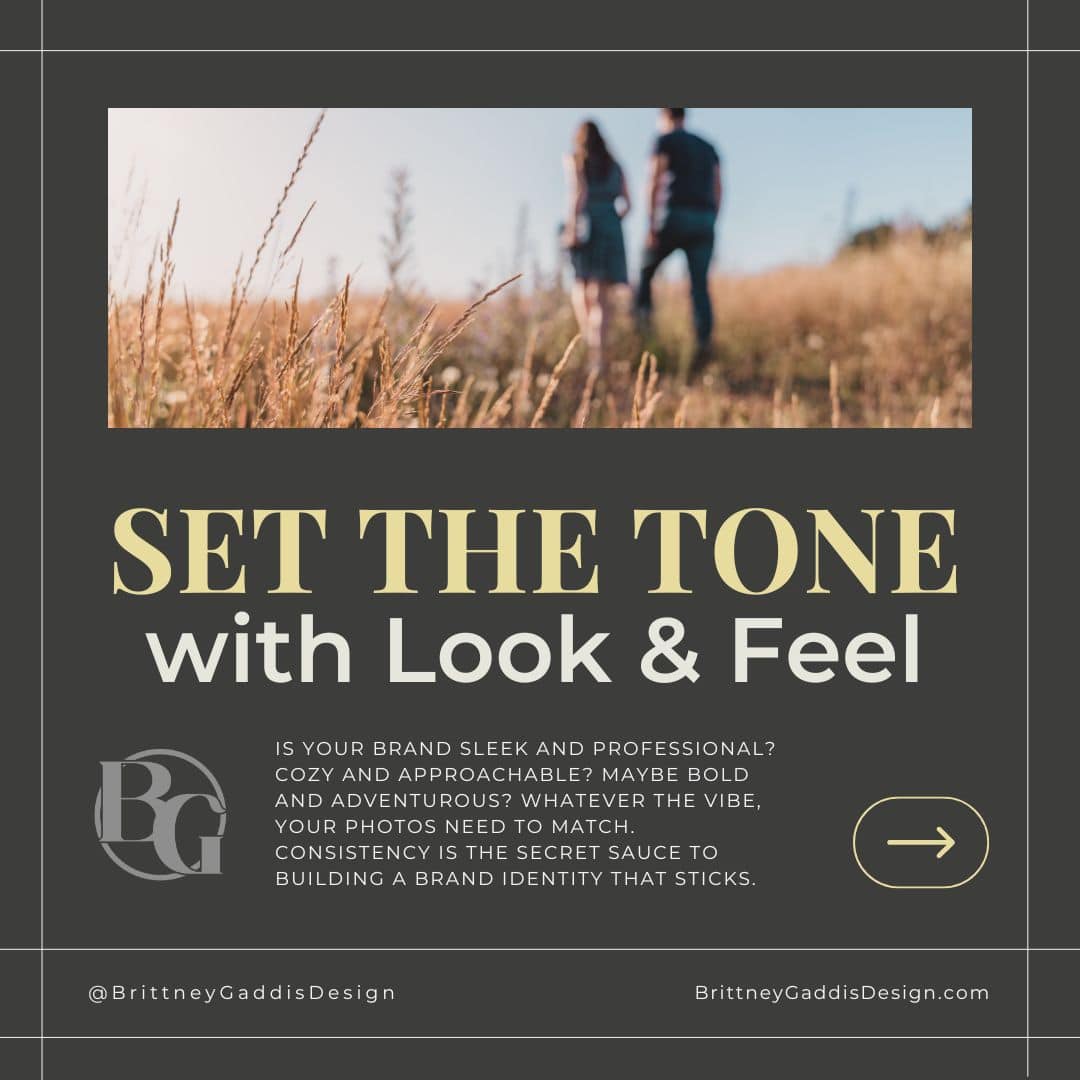
3. Set the Tone with Consistent Look and Feel
Your imagery should visually echo your brand voice, not fight it.
Are you a bold, adventurous brand? Use bright light, dynamic movement, and outdoor scenes.
A minimalist or luxury brand? Think negative space, polished lighting, and subtle tones.
Consistency across every platform (your website, social media, print materials, digital ads, etc.) builds familiarity and trust.
We designers didn’t create your brand guideline book for no reason. Take a look at it and ensure that the photography that you have chosen is consistent in colors, emotions, and overall brand vibe with the images that you have selected to use in your marketing. If there is a disconnect here, your customer may be confused about your legitimacy.
Pro Tip: If you weren’t provided one in your brand guide when your logo was created, try creating a mini branded photography strategy guide page. List the brand’s preferred lighting styles, color tones, and visual themes and provide examples of these styles. Then, when you do hire a photographer for lifestyle or product photography they will have a guide to ensure that everything is consistent. Better yet, hire a trained eye and ask a graphic designer or photographer to help you put one of these together.
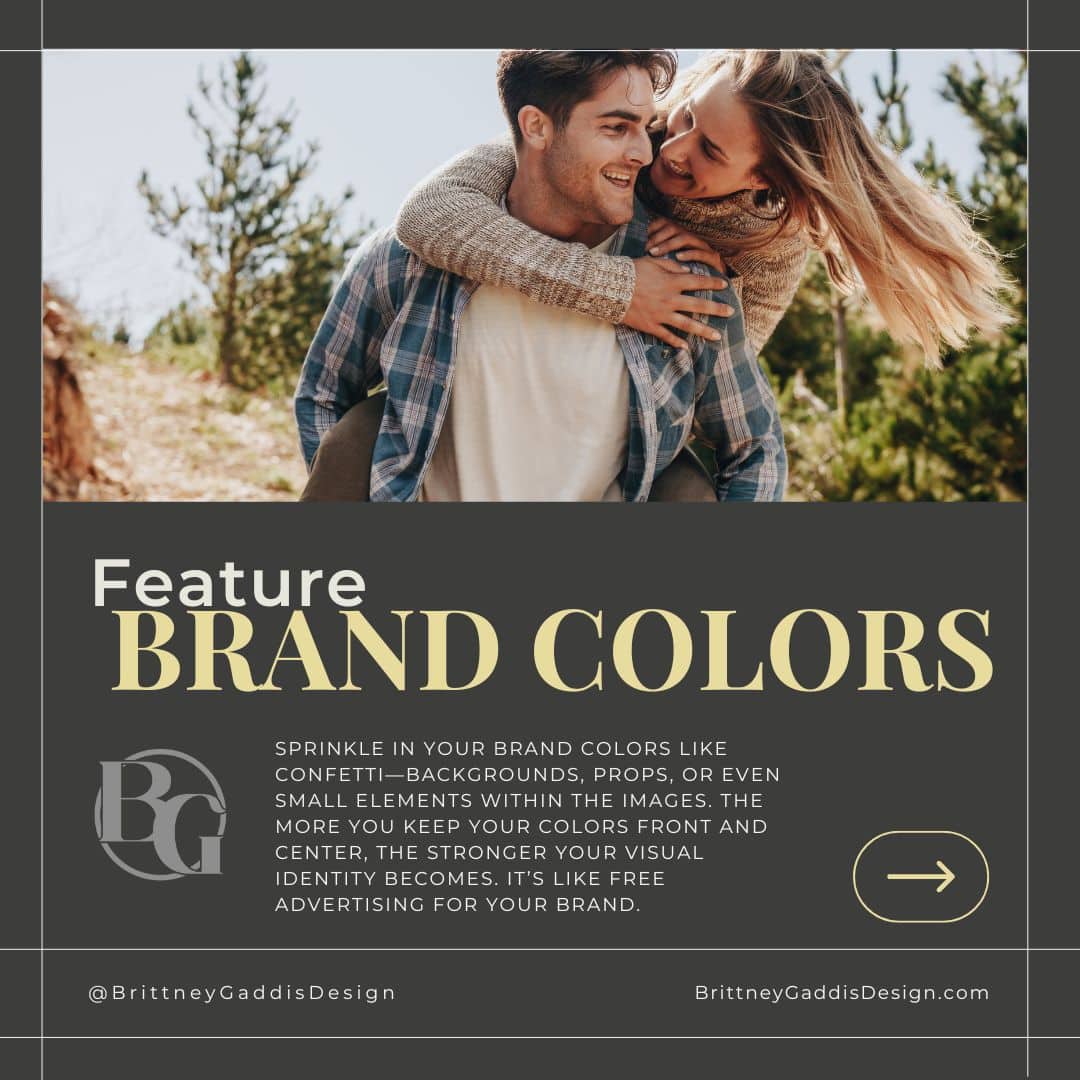
4. Feature Your Brand Colors
Your brand colors are one of your strongest identifiers. The more often your audience sees them in your photography or stock images (in props, clothing, or backgrounds), the faster they associate them with you.
On the flip side of this, avoid contrasting colors. For example, if your brand color is grass green, avoid using heavy orange accents in your photography. It’s best to lean on colors that are not in your brand palette for use in your photography as it can confuse customers. Now is not the time to boldly insert your favorite color into your brand just because you like it. Consider your audience.
You don’t have to paint everything your brand color. Just sprinkle it in strategically. Subtle repetition of your palette reinforces brand recognition without feeling forced.
Pro Tip: When sourcing or shooting photos, keep your brand color guide open. Compare each image against your palette. If it clashes or feels “off,” it’s not worth using.

5. High Quality Photography Matters
High-quality photography signals professionalism. Blurry, low-res, or generic stock photos do the opposite. They make even the best campaign feel cheap.
Invest in crisp, high-resolution imagery (whether through a photographer or carefully chosen stock). Make sure your photos are properly edited and formatted for web use.
Here are some of my favorite stock photography sites:
- Adobe Stock
- iStock
- Shutterstock
Pro Tip: When using stock photos, reverse-search them on Google Images first. If you find them plastered across dozens of sites, skip them. You want your visuals to feel unique, not overused.

6. Match Photos to Your Marketing Goals
Not every photo belongs everywhere. Use images that align with each stage of your marketing funnel.
- Website headers: big, clear, emotional impact shots
- Email campaigns: personalized, lifestyle images
- Social media: a mix of people-focused, brand color-infused visuals
The right photo at the right time reinforces your message and helps turn browsers into buyers.
Pro Tip: Create a shared image library organized by marketing goals: “awareness,” “engagement,” “conversion.” That way, your team can quickly grab on-brand visuals that fit the strategy instead of starting from scratch every time.
7. Your Quick Visual Checklist
Before you hit publish, make sure your imagery checks these boxes:
- Reflects your audience
- Evokes the right emotion
- Matches your brand look and feel
- Incorporates brand colors
- High-resolution and professional
- Fits your marketing purpose
The best photo selections for your brand don’t just look good, they work hard to get your message across. Like a good logo and compelling copywriting, your photography helps to foster client trust, emotion, and professionalism.
If you’re fed up with endlessly digging through stock sites to find images that convey what you’re trying to get across to your client, it might be time to bring a professional graphic designer on board who knows your struggle and can help you solve it.
Let’s talk about choosing photography that works for your brand
FAQ
How many brand photos should a business use?
It’s best to select or take a variety of photos that are similar in style for your brand. You’ll want to have options to select from when putting together your marketing material. If you use the same photo or two over and over again it gives the impression that your company is cheap or possibly even not real. Aim to have over 10 high-quality photos to use in different places.
Should I hire a photographer or use stock photos?
I personally LOVE working with brands that hire talented photographers to provide their photography, but high quality stock will also work. If you have a product, be sure to have actual photos of your product, not just stock.
How often should I update my brand imagery
If you feature people in trendy clothing that may need to be updated based on fashion trends, updating every few years is ideal. Styles and trends change, so its always wise when considering your marketing to stay up-to-date.

Recent Comments